
How to Create the Perfect Startup Presentation?
Even the best startup needs to present itself well – whether to investors you plan to raise funding from, or to potential customers who are expected to buy your product or service. In such cases, a good presentation can be the key to success. We explain how to create such a presentation and how to tell whether it will help a startup achieve its goals.
Contents:
- How to evaluate a presentation? The criteria in brief
- Types and structure of presentations
- Practical tips
How to evaluate a presentation? The criteria in brief
Let’s say you have already created a presentation or are only planning to prepare one. But how can you tell whether you are doing everything right? You can use several criteria for this, listed below.
Clarity and structure. The presentation should make the startup’s goals and core ideas clear. The slides and information must also follow a logical sequence.
Problem and solution. The presentation should demonstrate a clear understanding of the market problem and describe in detail how the startup proposes to solve it.
Market potential. You need to present the startup’s target audiences and the approximate size of the market.
Trends. It is also worth describing current and future trends in the industry to show the team’s awareness and its understanding of the market in which it operates.
Unique value proposition. Clearly highlight the startup’s distinctive features and competitive advantages, as well as the value the project creates for users and customers.
Business model. Investors need to understand how the startup plans to make money and what investment it needs to operate.
Marketing and sales. You should also describe how the product or service will be promoted in the market. A ready-made plan for acquiring customers and growing sales will be an advantage.
Team. Introduce the startup’s team, with an emphasis on their experience and expertise, as well as their roles and responsibilities in the company.
Prototype or MVP. If the startup already has a first version of its product, even an early one, it should be shown to the audience. This is a much stronger argument than an idea that has not yet been implemented.

Once the presentation is ready, look at it “from the outside” and try to evaluate it the way your audience would.
- Check the level of detail – how thoroughly and completely the startup has presented its concept. After all, investors and experts assess how well the presentation covers the key aspects of the business and which details are included.
- Anticipate your audience. A well-defined, clear target audience shows how well the startup understands its users and its market.
- Identify the focus of the presentation. What does the presentation emphasize – key problems, solutions or other aspects of the business? Focusing on the key aspects helps make the presentation clearer and more compelling.
- Clearly define the goal of the entire presentation. A clear and specific goal helps show what effect the startup wants to achieve, which has a positive impact on how potential investors and the audience as a whole perceive it.
All these criteria are interconnected and together shape the overall impression of a startup’s presentation. The more detailed the presentation, the better the key aspects of the business are understood.
Types and structure of presentations
Beyond meeting the basic criteria, you can adapt a presentation depending on its goals. Below are descriptions of some types of presentations.
Pitch Deck. Its goal is to attract investors’ attention and present the startup’s core idea in a short time. It usually includes slides on the problem, solution, market, business model, team, forecasts and the investment being sought.
Investment Deck. It allows you to present the startup to investors in detail in order to raise investment. Its structure covers all aspects of the business, including the problem, solution, market, competition, team, business model, financial metrics and plans for using the investment.
Product Deck. The purpose of this presentation is to showcase the company’s product and highlight its features and advantages. The structure focuses on the details of the product, its functionality, customer value, competitive advantages, use and technological aspects.
Grant presentation. The goal is clear from the name – to obtain a grant, support and funding from foundations or organizations. The structure usually includes a description of the problem, the proposed solution, a justification of the need for funding, a budget, a work plan and expected results.
Demo presentation. It is designed to show the functionality of a product or service through a live demonstration. The focus should be on showing the product itself, its capabilities and practical use cases.
Sales Deck. The purpose of this presentation is to convince potential customers or partners to buy a product or service. Here the structure should include slides on the customer’s problem, the solution, the product’s advantages, customer value, terms of cooperation and contact information.
Remember that there is no universal recipe for a presentation: different types should be combined with one another and adapted to the target audience. But these tips will help you convey key information as effectively as possible and achieve your goals.
Practical tips
As noted above, preparing a startup presentation requires attention to detail and the ability to convey key information clearly and persuasively. Below are a few more points that will help you do so.
Understanding the audience. Study your target audience – whether investors, customers or partners – and tailor the content of your presentation to their interests and expectations.
Brevity and clarity. Don’t make too many slides; focus on the most important aspects instead. Every slide should be easy to read and understand.
The startup’s story. Tell your startup’s story, highlighting how you arrived at the idea and how the problem you are solving can be seen through your story.
A clear goal. Clearly define the goal of your presentation – investment, partnership, sales and so on.
Presentation structure. Use a logical structure with an introduction, problem, solution, market, business model, team, financials and a closing call to action.
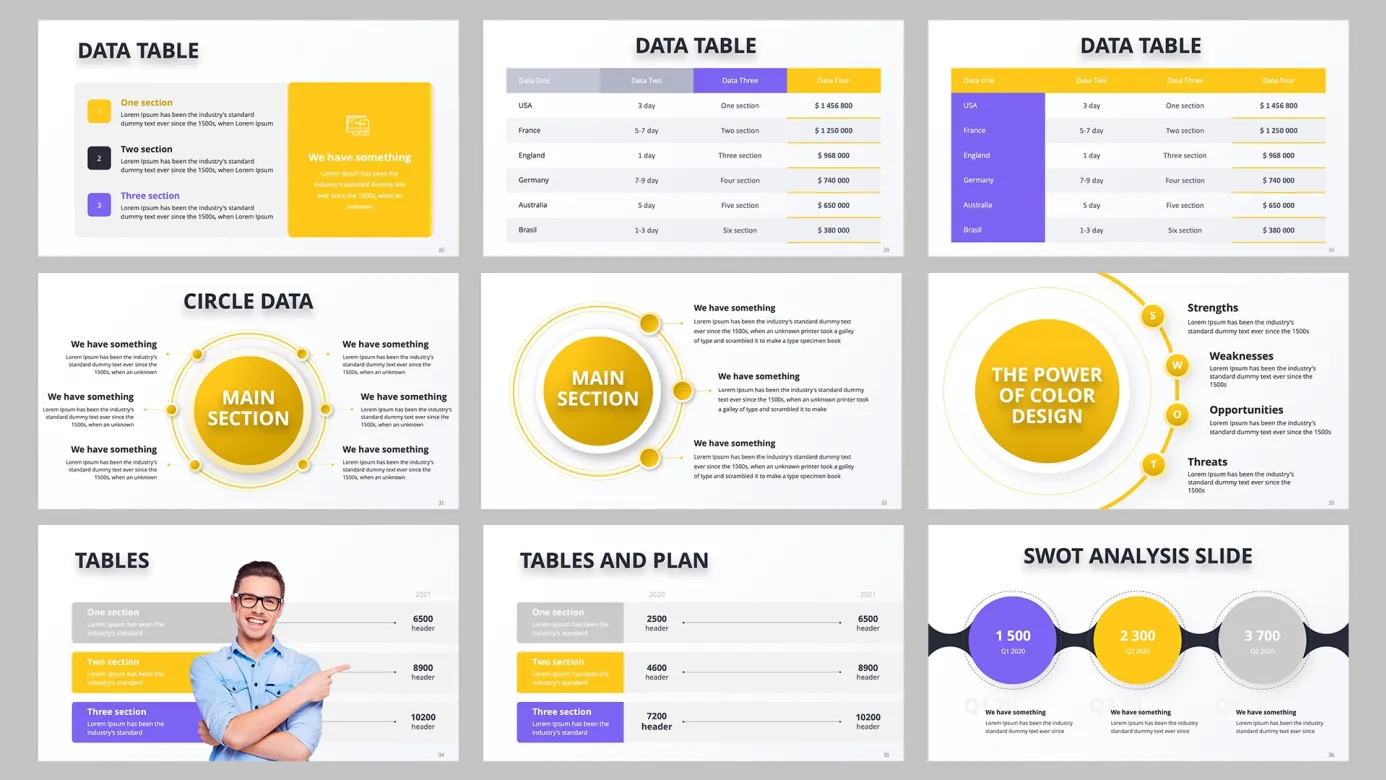
Graphic design. Use professional design. Avoid cluttered slides and use expressive graphics and images.
Focus on advantages. Highlight the unique advantages of your product or service and explain why your startup is better than its competitors.
Demonstrating results. If possible, show your product or service. Nothing is as convincing as real results and functionality.
Practice before presenting. Do several practice runs in front of friends or colleagues to get comfortable with the material and receive feedback.
Answering questions. Prepare for questions that may be asked after the presentation. They may concern additional data on the product, market, team and so on.
Attention to detail. Check grammar, spelling and formatting. This will make the presentation more professional.
Presentation as a story. Try to tell your story as a continuous and engaging narrative. This will help you build an emotional connection with the audience.
We are confident that these tips can help you create a presentation that conveys the essence of your startup and engages your audience.
Examples of startup presentations in Kazakhstan are easy to find on YouTube. There are plenty of them there, for example, from the Digital Bridge forum.


