

Investing for Beginners. Where to Start in 2024?
Investing is an additional way to earn money without quitting your main job.
Contrary to popular belief, investing is not a story about people in expensive suits trading on the stock exchange. Today, anyone with internet access and minimal starting capital can earn additional income. Here is how to start investing and what you need to know before putting your hard-earned money into different types of assets.
Contents:
- What is investing?
- Types of investing
- Rules of investing
- How much do you need to start?
- Where to invest? An overview of asset types
- Common mistakes beginner investors make
- Investment trends in 2024
What is investing?
Armand Jean du Plessis de Richelieu, known to everyone as Cardinal Richelieu, head of the French government in the 17th century, once said: “Finance is the fulcrum which, according to Archimedes, can move the whole world”.
This idea has only become more relevant today. A person's quality of life and almost all of their opportunities depend on their financial situation. But what should you do if you don't have enough money to make your dream come true – for example, to buy a home or upgrade to a bigger one, purchase a new car, pay for your children's education or secure a comfortable retirement? You could take out a loan for all of this, but why do that if you can earn money by investing?
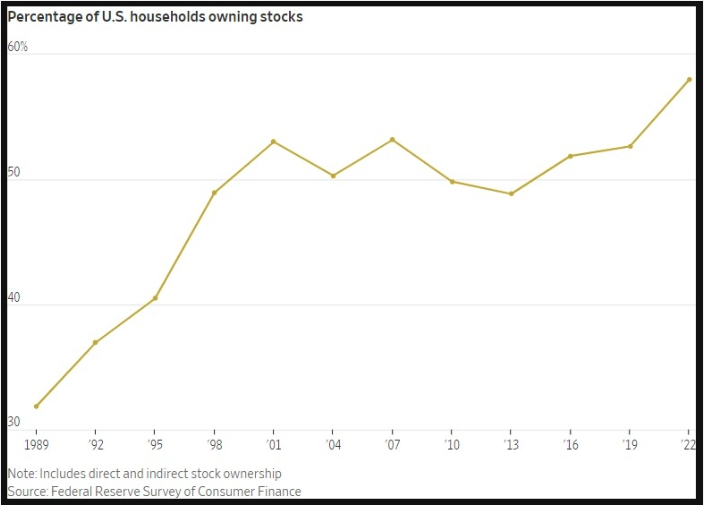
Put simply, investing means putting your capital to work to generate a profit. It is not only entrepreneurs who invest, but private individuals as well. According to data from The Wall Street Journal, about 58% of US citizens owned stocks in 2022.
This is the result of a highly developed investment industry in the country and a high level of financial literacy among the population. People there seek to build capital not only through salaried work but also through investing.
Investing in Kazakhstan has not yet reached such a high level. According to data from Corner.kz, a website specializing in investments, investors in the Kazakhstan stock market account for about 3.5% of the country's population. This figure lags far behind Western countries such as the US, but it is growing steadily. Since the beginning of 2023 alone, the number of Kazakhstanis' investment accounts on the stock market has grown by a quarter.
The reason is growing financial literacy and easier access to the stock market. The pandemic pushed brokers and banks to create more services that help people invest, for example, in shares of Kazakhstani and global companies. You can read a brief overview of them here .
The Kazakhstani outlet Kursiv writes: “New mobile apps allow clients to open accounts and start trading on the stock market remotely, without visiting an office”.
In addition, such services have minimal funding requirements. Roughly speaking, you can start investing by buying just one share – even the cheapest one.
Even more investment opportunities emerged in 2023, enabling you to invest and earn with confidence in 2024.
Types of investing
There are two approaches to investing: you either invest yourself or entrust the management of your money to someone else. Let's start with the second option.
You can use the services of trust managers. These are financial and investment management professionals who manage a portfolio of assets on behalf of a client. Their goal is to maximize returns while reducing risks for the client.
You hand over certain assets to them, and they start using them to generate profit. This involves analyzing financial markets, building an investment portfolio in line with the client's goals and managing risks to minimize losses.
Trust managers can be either individual specialists or specialized companies. When choosing one, look at their experience, relevant education and, of course, a track record of success with other clients.
Trust managers usually work with large sums (roughly $10,000 or more), and if that is not your case, there are mutual funds (unit investment funds). Mutual fund creators buy stocks and bonds to build an investment portfolio. They try to fill it with the most profitable and promising securities.
Such securities are often expensive individually, and beginner investors cannot afford to buy enough of them on their own to earn a noticeable profit from their price growth or dividends.
Viktoriya Ilyina, author of the book “Personal Finance”, writes: “Once the portfolio is formed, its creators offer investors the opportunity to buy ‘units’, that is, small portions of the portfolio, usually at a low price. The unit holder will ultimately receive income from all the stocks and bonds in the portfolio.”
According to her, the advantage of this approach is that mutual funds are managed by professional investors or brokerage firms that can assess prospects and risks more reliably. And even if one of the companies whose shares are in the fund goes bust, the others can offset this with their returns.
If you are just starting out or are not ready to entrust your money to a stranger, then self-directed investing is your path. In this case, the investor studies the market and makes trades to buy or sell assets on their own. Here, you need to pay close attention to the balance between returns and risks.
Rules of investing
The main rule of investing is “high returns mean high risks”. You can earn a lot of money with minimal starting capital, for example, on exchange rate fluctuations. But your forecast may not come true, and you will lose all your money.
Conversely, you can buy bonds of a developed country, such as the US, and earn 1-2% a year. But you are almost 100% guaranteed to get your money and profit back.
To avoid losing all your money at once while still not earning too little, you need to follow the rules of investing.
First – set yourself a financial goal. It can be a specific amount you want to reach by a certain year or some specific purpose. For example, you need to prepare to pay for your children's education abroad, or you don't want to depend on the Unified Accumulative Pension Fund after you retire. This makes investing more conscious and tangible for you.
Second – think through how your investment assets will be allocated. Asset allocation is an investment strategy in which you spread your investments across different asset types to strike a balance between return and risk.
For example, you can hold currencies (high risk of the exchange rate falling, but also potentially high returns if it rises), stocks (moderate risk if the company is stable) and bonds (low risk, but also low returns).
For example, you can read a Kazakhstani brokerage firm's recommendations on building a portfolio.
“Market participants focus on portfolio investments for a reason. Individual stocks on the exchange can grow for years or even decades. But every company faces the risk of a crash at some point. That is why you need to hedge against it and spread your funds across different assets. Then the performance of specific securities will matter less. You will even be able to absorb losses on some ideas painlessly, since the overall result of all your investments will be positive. As you already know, this kind of allocation is called diversification. It helps reduce risk and capture more potentially profitable opportunities” – write analysts at Freedom Broker.
Here are some important steps for allocating assets in your investment portfolio.
– Understand the different asset classes. Study types of assets such as stocks, bonds, real estate, currencies or cryptocurrencies. Then determine which assets suit you best in terms of risk and potential return.
– Set the percentages. Decide what percentage of your portfolio will go into each asset type. The shorter the time frame for reaching your financial goal, the more carefully you need to consider which assets to include in the portfolio – it is important not to lose all your money at once. But if you have a lot of time, for example, when saving for retirement, you can include more high-risk assets in your portfolio – over the long term, despite financial crises, stocks almost always grow significantly.
– Monitor your allocation constantly. Review your portfolio regularly and adjust it if market conditions change. Perhaps some stocks need to be sold, while others look promising.
– Keep your assets diverse. Buying assets from different industries or countries will help reduce the overall risk to your portfolio. If one country is in crisis, another may see rapid economic growth, which will also drive up the share prices of companies from there.
Remember that every investor is unique, and there is no one-size-fits-all recipe for building a portfolio. But if you are unsure, you can look for recommendations from brokerage firms – they usually publish reviews of various companies' stocks openly.
How much do you need to start?
There is no right answer here. It all depends on what you plan to invest in and how much spare money you have. For example, you can start investing in the Kazakhstan stock market with 1,000 tenge – buy a few shares of “Halyk Savings Bank of Kazakhstan” (Halyk Bank) on the Kazakhstan Stock Exchange and receive dividends on them once a year. With $100, you can already buy a few shares of American companies such as Twitter, Pfizer or Bank of America on KASE.
But the more money you have, the more instruments become available. For example, with a few thousand dollars you can already place your money in trust management or invest in a mutual fund (on the Kazakhstan market, usually from $1,000).
The key rule here lies in your attitude toward money. Remember that investing always involves risk and the possibility of losing your entire investment. That is why you should not invest your “last” or borrowed money. You can lose your investment if you make the wrong decision, but this should not affect your quality of life.
Where to invest? An overview of asset types
A wide variety of assets are available in Kazakhstan, both domestic and foreign. Let's look at their pros and cons.
Deposits
This is the most traditional way to invest. Deposits suit those who value reliability and are willing to sacrifice part of their potential income for a low level of risk.
Pros of investing in deposits:
Stability. In Kazakhstan, deposits are guaranteed by the state (up to 20 million tenge for savings deposits in tenge, up to 10 million tenge for other tenge deposits, and up to 5 million tenge for foreign currency deposits). This guarantees you get your money back even if the bank goes bankrupt.
Guaranteed returns. You know in advance how much income your investment will generate over the year.
Liquidity. It is easy to top up a deposit or withdraw all the money from it.
Now the cons of investing in deposits:
Low returns. Deposits provide a fixed return, but it may be lower than the profit from stock price growth over the same period.
Impact of inflation. You need to make sure your deposit's return is higher than the country's inflation rate.
Stocks
By buying a company's share, you become one of its co-owners and, accordingly, are entitled to income from share price growth and dividends paid out of its profits.
Pros of investing in stocks:
Potential for value growth. Profit on stocks comes primarily from growth in their value. Buy low, sell high.
Dividends. Most companies pay dividends to their shareholders out of profits. This provides a steady income that you can withdraw and spend on your needs or reinvest.
Liquidity. Shares of large companies are very
liquid, meaning they can be quickly bought or sold on the stock exchange.
But there are also cons of investing in stocks:
Risk of falling value. Just as stocks can rise over the years, they can also fall if the company is not doing well.
Economic risk. A crisis may begin in the country where the company operates, and its share price will drop due to negative market sentiment, even if the business as a whole is doing well.
Dividend uncertainty. Dividends are not guaranteed, and companies may change their size or even stop paying them depending on their financial situation.
Need for in-depth analysis. Before buying a company's shares, you need to carefully study its condition, financial statements and the prospects of the market in which it operates.
Bonds
Bonds are debt securities issued on an exchange by a company or a government. The issuer borrows money from investors for its development, promising to repay it after a set period (one, two or three years) with interest. The interest is usually not very high, but the repayment guarantees are strong.
Pros of investing in bonds:
Stable income. Bonds provide a stable and predictable income in the form of interest payments.
Reliable return of principal. Unlike stocks, bonds oblige the issuer to repay the full amount of the investment at maturity, plus interest.
Portfolio diversification. Investing in bonds helps reduce the level of risk in your investment portfolio.
Liquidity. Bonds of large companies or stable governments are even more liquid than stocks. They can be bought or sold on the secondary market.
There are also cons of investing in bonds:
Low potential for value growth. Most bonds do not rise in price.
Impact of inflation. If the bond interest rate is low, inflation can eat up all the income (relevant for Kazakhstan).
Issuer risk. If the company that issued the bonds cannot pay interest or repay the principal, investors may suffer losses. And getting your investment back may take a long time due to lengthy bankruptcy proceedings.
Real estate
One of the most popular investment options in Kazakhstan. People will always need somewhere to live, and a growing population and migration to cities are driving up housing prices.
Pros of investing in real estate:
Investment stability. Real estate is a concrete, tangible asset that you own directly and can either use yourself or rent out.
Value growth over time. In the long run, real estate always rises in price.
Tax benefits. In Kazakhstan, you can use a tax deduction and pay less tax to the state if you bought your home through Otbasy Bank.
Lower portfolio risk. Real estate is one of the most stable assets and always stays with you.
As always, there are cons of investing in real estate:
Liquidity. Real estate takes longer to sell than stocks, bonds or currency.
High entry threshold. Buying an apartment or a house requires a lot of money, even if you plan to buy with a mortgage.
Market risks. Crises can affect housing prices in the short term, as happened in Kazakhstan in the late 2000s due to the global financial crisis. Back then, almost all real estate quickly fell in price.
Maintenance. Real estate needs to be looked after, and you have to invest in keeping it attractive, especially if you rent it out.
Location dependence. The better the location of your property, the more it will be worth, especially if the city is growing rapidly and there is demand for housing.
Precious metals
One of the rarest types of investment, but it is nevertheless available in Kazakhstan. It mainly involves gold and silver, and much less often other metals or minerals.
Pros of investing in precious metals:
Preservation of value. Precious metals, especially gold, have traditionally been seen as a store of value. They can protect against inflation and currency fluctuations. It is usually gold that rises in price during crises.
Independence from others. You do not depend on the success of a particular company, as with stocks and bonds, or on a developer who may fail to complete the residential complex where you invested in an apartment.
Liquidity. Gold and silver are relatively liquid. If you own physical metal, you can quickly exchange it for money, and if you bought securities linked to metal, you can quickly sell them on the exchange.
Cons of investing in precious metals:
Metals do not generate income. Precious metals do not pay income in the form of interest or dividends, as stocks or bonds may. You can only sell them when their value rises.
Price volatility. Precious metal prices can change if the stock market is booming. Investors move their money there and stop keeping it in metals.
Storage requirements. Investors who buy physical metal face the need to store it safely. This entails additional costs, for example, for a safe or a bank safe deposit box.
You need to choose the financial instrument carefully if you buy metal-linked securities on the exchange.
Currency trading
One of the first instruments that comes to mind when you want to make money. We will look at it not in terms of holding cash, but in terms of trading on Forex.
Pros of currency trading:
Liquidity. The Forex market is one of the most liquid markets in the world, which ensures a high degree of accessibility and the ability to execute trades quickly.
Variety of trading pairs. Forex offers a wide choice of currency pairs, allowing traders to choose their instruments. These include not only the familiar tenge-dollar, euro-dollar or tenge-ruble pairs, but every possible currency in the world.
Unlimited opportunities. The Forex market operates around the clock, and traders can trade at any time of day, which allows for a flexible schedule.
Cons of online currency trading:
High risk. Currency prices change constantly and depend on many factors, including the most unexpected ones, such as geopolitical instability.
Complexity of analysis. Analyzing currency markets requires an understanding of macroeconomic factors, politics and global events, which can be difficult for beginners.
Cryptocurrency trading
A new trend in investing that is just over 10 years old. The pros and cons are largely similar to those of regular currency, but there is one caveat – before investing, study how cryptocurrencies work. This may prove too challenging for novice investors.
Pros of cryptocurrency trading:
High volatility. This market is highly volatile, which can provide opportunities for profitable trading in a short time.
Accessibility. Cryptocurrency trading is available to virtually all investors, even with the smallest amounts.
Decentralization. The cryptocurrency market is not regulated by government or financial institutions. Therefore, their influence on the market is reduced.
Cons of cryptocurrency trading:
Lack of regulation. Most cryptocurrency exchanges are not regulated at all, so there is a risk of losing all your money due to theft or the exchange shutting down.
New market. The cryptocurrency market is relatively new, and its instability and unpredictability pose a major risk to investors.
Technical risks. You need to understand the technical aspects of cryptocurrencies and the principles of storing your digital assets securely. You can't just put them on a bank card.
Influence of external factors. Although there is no regulation, political decisions do affect cryptocurrency prices. For example, when China announced a ban on the use of cryptocurrencies, their value dropped sharply.
Startups
Investing in promising companies that introduce new technologies can bring significant profits. But you can just as easily lose all your money if the startup doesn't “take off”.
Pros of investing in startups:
Potential for high returns. If successful, startups can give investors high returns, many times greater than those from traditional types of investment.
Opportunity for active involvement. Unlike with stocks, startup investors can influence the company's development, which can increase the chances of success for the entire venture.
Early access to promising companies. Startup investors get the opportunity to invest in companies at early stages of their development, when share prices are still low.
Cons of investing in startups:
High risk. Most startups do not survive to the point where they can make a profit.
Uncertainty. When a company is trying to operate in a new market, its prospects are very unclear. It is difficult to predict success or failure.
Long payback period. Startup investments often take a long time to pay off, until the company starts making a profit.
Limited liquidity. Startup shares are not very liquid. Exiting such investments is very difficult.
Dependence on the startup team. Although investors can participate in the company's development, all success depends on the startup's founders and employees. Their mistakes and wrong hypotheses can lead to the business closing down.
Common mistakes beginner investors make
If you are just starting your investment journey, you need to avoid several common mistakes that can hinder your success. Here are a few of them:
Lack of education. Some beginner investors neglect learning and researching the market they plan to invest in. An insufficient understanding of investment instruments and the market leads to wrong decisions.
No strategy. Some investors start out without a clear strategy and targets. This can lead to rash investments and, as a result, the loss of income or even all their money.
Taking on too much risk. Some beginner investors can be too aggressive and put too large a share of their capital into high-risk assets, without considering their financial goals and their tolerance for risk and panic.
Panicking when the market falls. Beginner investors may give in to panic when stock or currency markets fall and sell their assets for fear of further losses. Emotional decisions can lead to losses.
Ignoring long-term prospects. Some investors think only about short-term trends and forget about long-term prospects. It is important to be able to distinguish noise from truly important factors.
Insufficient portfolio diversity. Some investors focus on just one type of asset or invest in a limited number of companies without diversifying their portfolio. This increases risk.
Ignoring costs and fees. Beginner investors may underestimate the impact of fees and taxes on their final returns. Trading too often leads to paying large fees to the broker, which eats into the profit.
Imitating other investors without analysis. Imitating successful investors can be useful, but blindly copying them without understanding how their decisions were made can lead to mistakes and losing money.
“Investing is a long-term process, and successful investors usually look at long horizons and carefully study everything they plan to invest in”, says Astana-based economic commentator Yuri Masanov.
Investment trends in 2024
The main investment trends for 2024 were well described by the Kazakhstani outlet Kursiv. Its journalists asked experts where it makes sense to invest.

For example, Saken Ismailov, chief analyst at the brokerage firm Halyk Finance, advises paying attention to the essential consumer goods sector, such as healthcare, utilities and telecommunications services. “Companies in these sectors tend to show stable performance during economic slowdowns thanks to more resilient demand for their goods and services. In addition, such companies offer good dividend yields”, Kursiv writes.
Halyk Finance analysts also highlighted sectors with growth drivers – residential real estate, non-alcoholic beverages and tobacco products, cloud technologies and the semiconductor industry, as well as electric vehicles and e-commerce.
The Kazakhstani brokerage firm Freedom Broker also published its forecasts for 2024. The company's analysts identified four factors that will support the Kazakhstan stock market (the KASE and AIX exchanges) this year. These include a cut in the base rate of the National Bank of the Republic of Kazakhstan, which will lower deposit rates and push more investors to the stock market in search of higher returns.
It is also important that Kazakhstani companies whose shares are listed on KASE and AIX have “fundamental growth potential”.
“The situation for listed issuers still looks positive, even despite the strong rally and KASE being at all-time highs. Based on the valuation of its constituent securities, the index (KASE) has an upside potential of 15.6%”, according to a review by Freedom Broker analysts.
On the other hand, deposits will become less attractive, so you should limit their share in your investment portfolio.
Kursiv also cited forecasts for gold. In particular, the price of gold held up well in 2023, says Sultan Zhumagali, head of the analytics department at BCC Invest. The market saw significant outflows from gold funds, as higher Treasury yields made gold a less attractive asset for the investment community. “Nevertheless, weak investment demand was offset by strong purchases by central banks”, notes Sultan Zhumagali.
The cryptocurrency market may get a boost from the fact that the first bitcoin exchange-traded fund (ETF, similar to a mutual fund) will soon be registered. Most major investment firms already include cryptocurrencies among recognized asset classes.
If the first bitcoin fund is registered, it will generate demand not only from individuals (as is happening now), but also from investment companies. This will boost demand for this type of asset.
In general, however, remember that forecasts are only forecasts, and only your own analysis can serve as the basis for investing in particular assets. The global situation can change quickly, so you need to constantly monitor market behavior and adjust your portfolio when necessary to reduce potential risks.


